HathawayField Notes
← All concepts

Craft

13notes

On The Joy of Ownership

I drive a 1965 Corvette Stingray that was my father’s. There’s joy in keeping it in good condition and operational, and there’s joy in driving it. Its history gives both of those things more meaning than they would have with another car.

This Type 7 film captures that kind of attachment. It opens with a thought about making things people will want to keep using:

We want people to use what we make with affection for a long time.

That seems like a good ambition for anything worth making. An object can continue to be useful while becoming more meaningful to the person who owns it. Time spent caring for it becomes part of the pleasure of having it.

Later, the film connects that attachment to use:

I think affection includes the enjoyment of using it.

I feel that with the Corvette. Keeping it running lets me enjoy it as a car, while preserving something that matters to me because it was my father’s. Driving it adds to its history. I get to care for what it already means to me and keep enjoying it in the present.

youtube.com
On The Joy of Ownership

Engineering in natural language

Since Opus 4.5 arrived late last year, I’ve thought the future of software engineering would be engineers working with AI agents in natural language. The underlying code would increasingly be written and understood primarily by AI. DHH describes that shift in his Rails World opening keynote. Describing what the software should do becomes a larger part of the work, while agents handle more of the implementation.

That could eventually give us entirely new programming languages designed around agents. Rust already hints at the shift. A language can be unpleasant for a human to write and still be a great choice for the resulting software. DHH’s experience with Rust puts that tradeoff into practice: agents handle the code, while the product benefits from its performance and small executables.

I think this leads to better software. More of the effort can go toward making the product work well, including improvements that previously cost too much to justify. Engineers still have to figure out what to build and how it should work, then judge whether the result delivers that experience. Those decisions remain human work even as less of the implementation requires human hands.

Taste becomes even more important when almost any feature is within reach. Being able to build everything makes it easier to produce a product that tries to do everything, and those products tend to be poor. Good products have focus. It takes judgment to choose what belongs and discipline to leave the rest out, even when adding it is cheap.

September 2026

Less is more, but to get less you have to do more

A great reminder from Rick Rubin on why less is more.

This lesson applies directly to product design. Some of the best products in the world are simple and focused because their makers decide to do less. That restraint takes work: choosing what matters most, refining it, and saying no to everything that dilutes it.

instagram.com
Less is more, but to get less you have to do more

A reminder from Rick Rubin that simplicity is the result of doing the work.

August 2026

Best practices guarantee average performance. They are literally the prescriptions of others that limit variation and get you to a baseline of performance. Following them virtually ensures that you will be working harder and harder just to “keep up.” To be the best, you have to do things that no one can prescribe.

When you see a successful individual, a champion, a “winner,” you can be very sure that you are looking at an individual who plays great attention to the perfection of minor details.

— John Wooden
July 2026

Why do I write?

Why do I write? I deeply believe it is important for humans to build stuff. I think this is a primary reason we are on the planet, and I think that the ways a human can build are as varied as the humans who do the building.

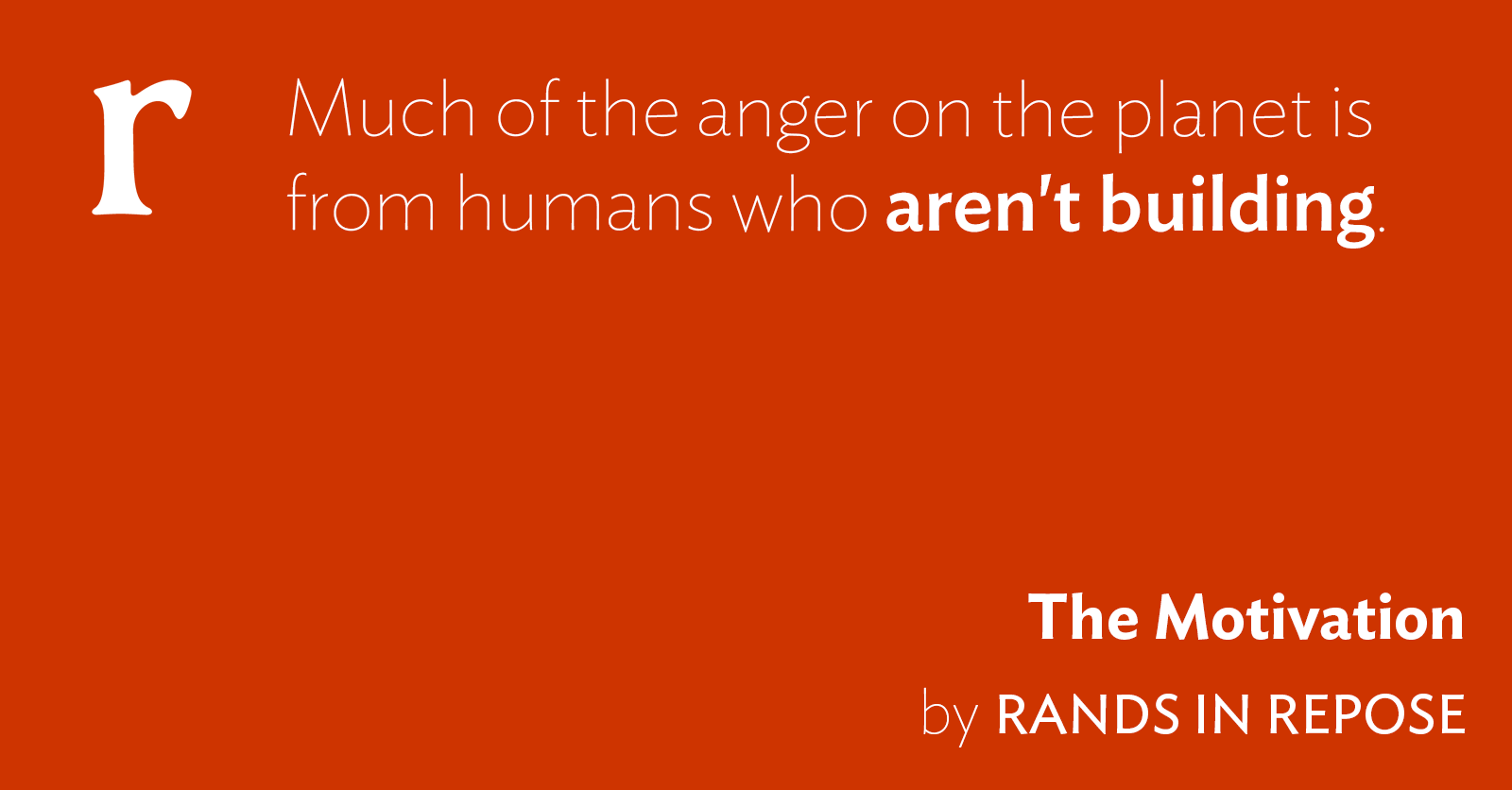
Failure to build is abhorrent to me. Much of the anger on the planet right now is from humans who aren’t building, believing they are owed a free lunch because they showed up, or they know better, or some other poorly informed worldview they acquired without effort, without curiosity… just because they exist in their particular circumstances.

Writing is how I build. That’s why I write.

You will never do 150% of a thing if you do not have a version of these motivations. 15% effort means you have not found your reasons yet.

randsinrepose.com
The Motivation

Why write? Not for the calm of it, or to help people, but because building is the point and writing is one way to build.

The second 90 percent

The first 90 percent of the code accounts for the first 90 percent of the development time. The remaining 10 percent of the code accounts for the other 90 percent of the development time.

— Tom Cargill, Bell Labs, via the Ninety-ninety rule

This rule is so true it barely reads like a joke. Anyone who has shipped software has watched a project reach “almost done” and then stay there while the real work finally shows itself.

Not even AI can break it. It changes how quickly we can get through the first 90 percent: scaffolding, boilerplate, tests, happy paths, and enough of the shape of the thing that it feels almost done.

But the second 90 percent still requires human judgment. Someone has to know which rough edges matter, which tradeoffs are acceptable, and when the product is actually right.

June 2026

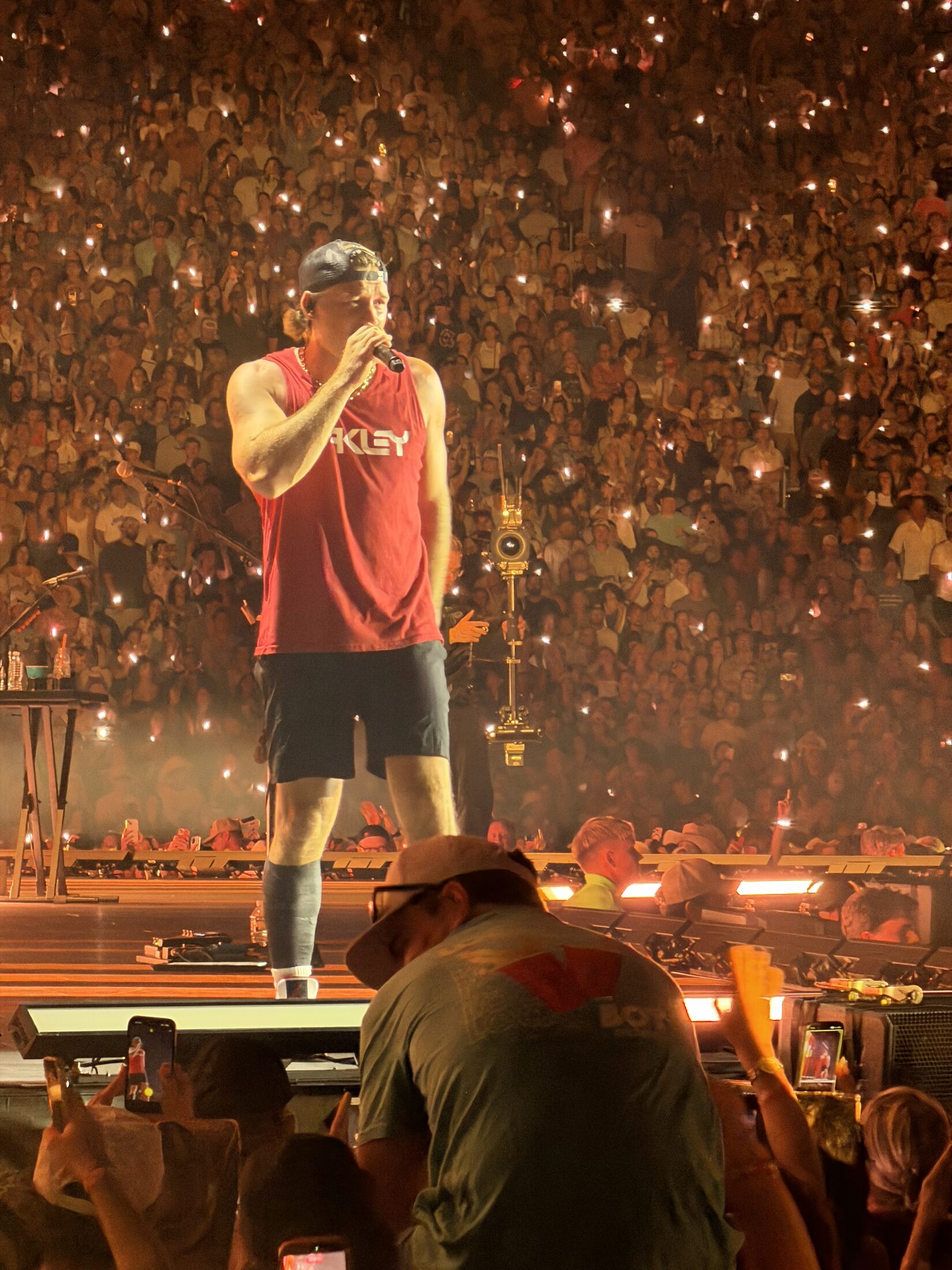
Morgan Wallen at Death Valley on Saturday. What I kept thinking about was how plainly he loves the work itself: making the songs, playing them, being up there. That’s the part you can’t manufacture, and from the stands it was the most obvious thing in the place.

May 2013
April 2011

A biz monkey is a replaceable, Powerpoint toting, suit wearing, acronym-spewing middle manager business dude drone. They are quick to comment and sneer, slow to actually ship.

People who understand technology and are willing to bend it to their will, on the other hand, are scarce. They can’t be found with a classified ad on Craigslist or in a blind project ad on eLance.

— Andrew Chen
sethgodin.typepad.com
Biz monkey

At 37signals, however, we have a different position on ambition. We’re not big fans of what I consider “vertical” ambition—that is, the usual career-path trajectory, in which a newbie moves up the ladder from associate to manager to vice president over a number of years of service. On the other hand, we revere “horizontal” ambition—in which employees who love what they do are encouraged to dig deeper, expand their knowledge, and become better at it. We always try to hire people who yearn to be master craftspeople, that is, designers who want to be great designers, not managers of designers; developers who want to master the art of programming, not management.

— Jason Fried
inc.com
Master craftspeople